
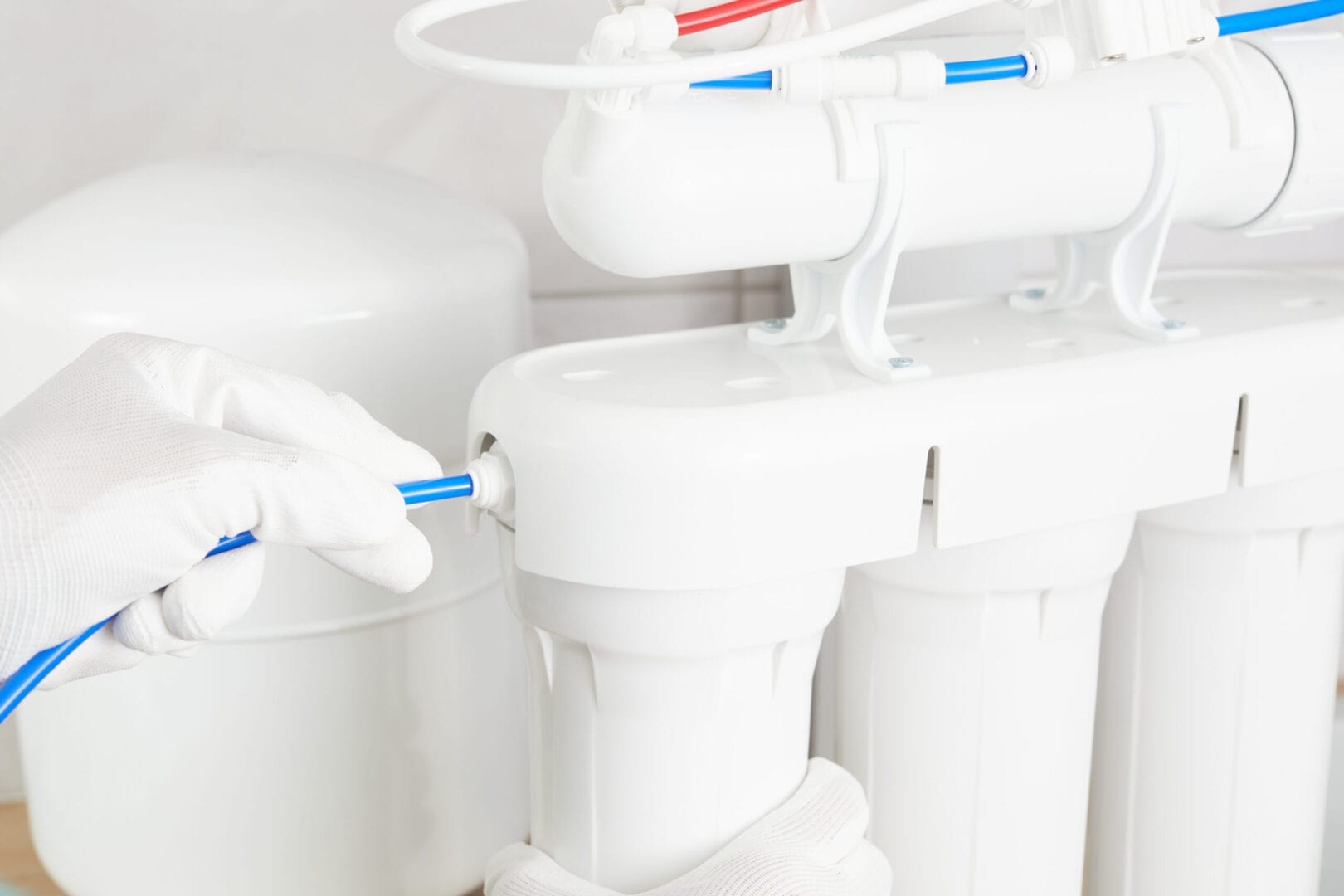
The RO uses a semi-permeable membrane to remove contaminants, while drinking filter systems typically use activated carbon to trap specific contaminants.
The RO system can remove up to 99% of contaminants, including heavy metals and microorganisms, whereas the drinking filter typical targets impurities like chlorine and sediment.
The RO system is more costly than the drinking filter system since they require an annual service and have more cartridges to change whereas the drinking filter is a single cartridge which can be sent through the post.
Pros and cons of the RO system:
Pros: They offer the most thorough drinking water filtration process. They remove everything, including bacteria. They improve the taste of water.
Cons: They use extra water in the filtration process and require an annual service visit. They do not retain harmless minerals.
Pros and cons of the drinking filter system:
Pros: They retain healthy minerals and are more affordable way to make tap water taste better. They do not use extra water.
Cons: They do not remove as many contaminants. They don’t reduce bacteria or microorganisms.